
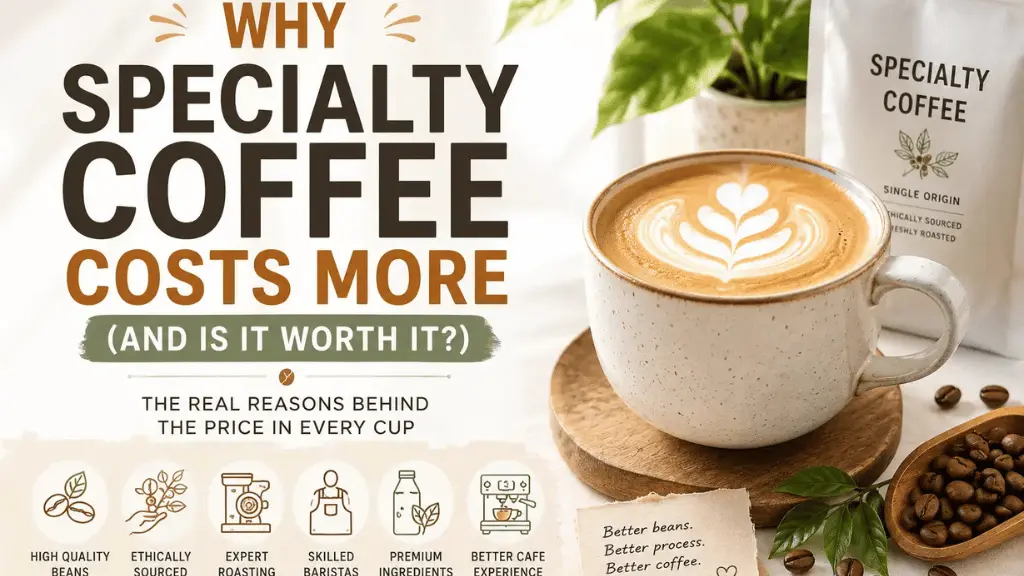
Imagine walking into two different coffee shops.
The first one sells a large cup of coffee for just a couple of dollars. A few blocks away, another café charges almost four times as much for what appears to be the same drink.
It’s a question almost every coffee drinker asks sooner or later.
“Why is this coffee so expensive?”
At first glance, both cups look similar. They’re both made from coffee beans, hot water, and sometimes milk. But once you look behind the counter, you’ll realize the biggest differences happen long before the drink reaches your hands.
The beans may have come from different farms. One café roasts coffee in small batches, while another buys large commercial blends. Even the way the coffee is prepared, served, and stored can change both its flavor and its price.
That doesn’t automatically mean expensive coffee is always better.
However, it does explain why specialty coffee often costs more than regular coffee.
In this guide, we’ll look at every step behind a specialty cup—from the farm to the final pour—and help you decide whether paying extra is truly worth it.
QUICK ANSWER
Specialty coffee costs more because it focuses on quality at every stage of production. Farmers carefully grow and harvest the beans, roasters prepare small batches to highlight natural flavors, and trained baristas use professional equipment to brew each cup with precision. While the price is higher than regular coffee, many people find the improved taste, freshness, and overall café experience worth the extra cost.
Table of Contents
Specialty Coffee vs Regular Coffee
| Feature | Specialty Coffee | Regular Coffee |
| Bean Quality | Carefully selected | Mass-produced |
| Harvesting | Mostly hand-picked | Machine harvested |
| Roasting | Small batches | Large commercial batches |
| Brewing | Made fresh to order | Often brewed in bulk |
| Flavor | More balanced and complex | Consistent but simpler |
| Freshness | Recently roasted | Longer shelf life |
| Experience | Focus on quality | Focus on convenience |
Looking at the table, it’s easy to see that the difference isn’t just about price.
It’s about how much care goes into every step before the coffee reaches your cup.
It All Starts With Better Coffee Beans
The journey of specialty coffee begins long before anyone turns on an espresso machine.
It starts on coffee farms where growers focus on producing quality instead of quantity.
Unlike large commercial farms that harvest massive volumes of coffee at once, many specialty coffee producers carefully monitor every stage of the growing process. Weather, soil conditions, elevation, and harvest timing all influence how the beans will eventually taste.
One small change can affect the entire crop.

That’s why specialty farmers spend months caring for plants before the beans are even picked.
Instead of collecting every coffee cherry in one pass, workers often harvest only the ripest fruit by hand.
It’s slower.
It’s more expensive.
But it also produces a cleaner and sweeter cup.
Imagine buying strawberries.
The bright red, perfectly ripe strawberries usually taste much sweeter than those picked too early. Coffee works in a similar way. Picking only ripe cherries allows the beans to develop better flavor before roasting even begins.
This extra care is one of the biggest reasons specialty coffee costs more than regular coffee.
Expert Insight
One of the biggest misconceptions is that specialty coffee becomes expensive inside the café.
In reality, much of the additional cost happens months before the beans ever reach the coffee shop.
The investment starts on the farm.
Farmers Are Paid for Quality, Not Just Quantity
Another reason specialty coffee costs more is the way many specialty buyers work with coffee farmers.
Traditional commercial coffee often rewards volume.
Specialty coffee rewards quality.
If a farmer consistently produces exceptional beans, those beans usually command a higher price because they’re valued for their flavor rather than simply their weight.
That higher income allows farmers to improve equipment, invest in better processing methods, and continue producing higher-quality harvests year after year.
It’s a cycle that benefits everyone involved.
Farmers receive fairer compensation.
Roasters receive better beans.
Customers enjoy a noticeably better cup of coffee.
When you pay a little more for specialty coffee, part of that price helps support the people who spent months growing it.
COFFEE FACT
Many specialty cafés proudly share where their beans come from. You’ll often see the country—or even the specific farm—listed on the coffee bag or menu. That level of transparency is much less common with mass-produced coffee.
Why the Roasting Process Matters So Much
Growing exceptional coffee beans is only the first step.
What happens next can either preserve those flavors or completely hide them.
Roasting is one of the most important stages in specialty coffee because it’s where the beans develop their aroma, sweetness, body, and character.
Large commercial coffee brands often roast thousands of pounds of coffee at once. Their goal is consistency and a long shelf life rather than highlighting the unique flavors of each coffee origin.
Specialty coffee roasters take a different approach.
Instead of producing huge batches, they usually roast smaller quantities while carefully monitoring temperature, airflow, and roasting time. Every coffee origin behaves differently, so roasters often adjust their roasting profile to bring out the bean’s natural characteristics instead of covering them with an overly dark roast.
For example, one coffee may naturally taste like dark chocolate and roasted almonds, while another offers hints of berries or citrus.
Those flavors aren’t added later—they’re already inside the bean. A skilled roasting process simply helps reveal them.
That’s why two coffees from different cafés can taste completely different even if both use high-quality beans.
Expert Insight
Many people believe darker coffee always tastes stronger.
In reality, darker roasting often masks the bean’s original flavor. Specialty coffee usually aims for balance rather than bitterness.
Fresh Coffee Simply Tastes Better
Imagine buying freshly baked bread from a local bakery instead of eating bread that’s been sitting on a supermarket shelf for weeks.
Most people can immediately taste the difference.
Coffee works in much the same way.
Freshly roasted beans retain more aroma, sweetness, and complexity. Over time, coffee gradually loses these qualities as it comes into contact with air.
That’s why many specialty cafés roast their beans frequently or work with local roasters who deliver fresh coffee on a regular schedule.
Instead of storing coffee for months, they focus on serving beans while they’re still full of flavor.
Fresh coffee may cost a little more, but it often produces a noticeably richer and more enjoyable cup.
Skilled Baristas Add Value to Every Cup
Even the best coffee beans won’t taste their best if they’re prepared incorrectly.
That’s where experienced baristas make a real difference.
Making specialty coffee isn’t as simple as pressing a button on an espresso machine.
Before your drink is even served, a barista makes dozens of small decisions that affect the final result.
They carefully:
- Measure the coffee dose
- Adjust the grind size
- Monitor extraction time
- Steam milk to the correct temperature
- Check the balance of every drink
Each step requires practice.
For example, extracting espresso for just a few seconds too long can create an unpleasant bitter taste. Milk that’s overheated may lose its natural sweetness and produce a burnt flavor.
These details may seem small, but together they determine whether your coffee tastes average or exceptional.
That’s one reason specialty cafés invest heavily in training their staff.
Customers aren’t simply paying for coffee.
They’re paying for consistency.
When you order your favorite latte today, you expect it to taste just as good next week.
A skilled barista helps make that possible.
Premium Ingredients Make a Noticeable Difference
Coffee may be the star of the drink, but it’s rarely the only ingredient.
Milk, syrups, chocolate, spices, and alternative milk options all influence the final flavor.
Specialty cafés often choose higher-quality ingredients instead of the least expensive ones available.
For example, imagine ordering two vanilla lattes.

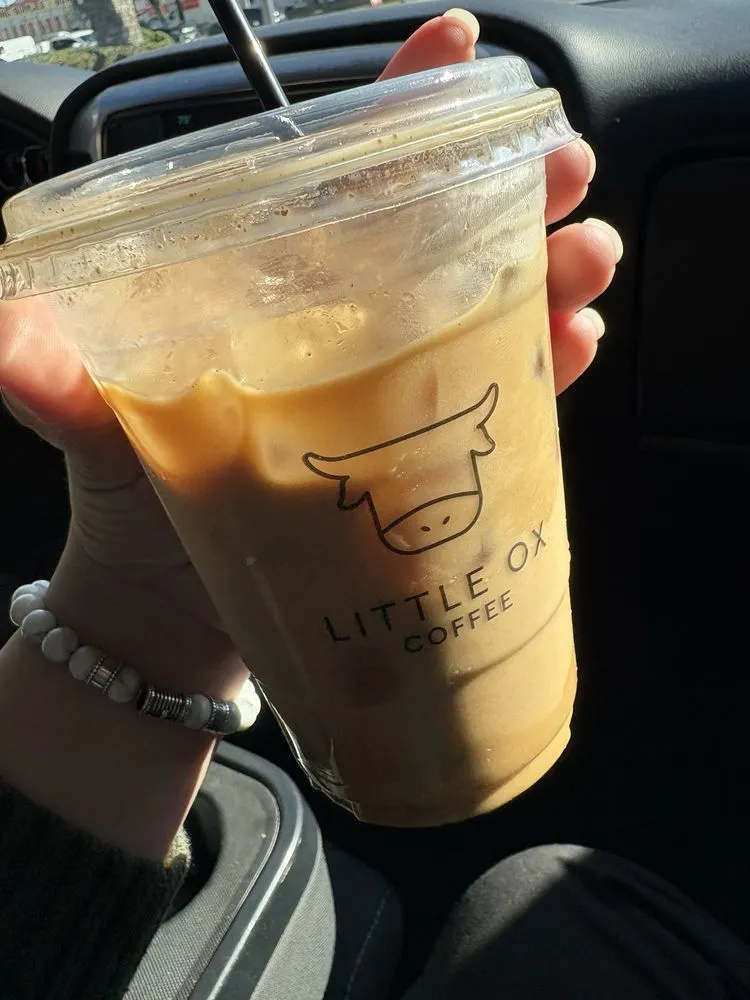

The first uses artificial vanilla syrup and lower-cost milk.
The second is prepared with real vanilla, fresh whole milk, and carefully balanced espresso.
Both drinks may look similar.
But after the first sip, the difference becomes much easier to notice.
Many specialty cafés also make their own syrups or use seasonal ingredients that aren’t commonly found in chain coffee shops.
That’s one reason signature drinks often feel more memorable than standard menu items.
The ingredients cost more—but they also create a better experience.
Nutrition information for milk and other ingredients is available through USDA FoodData Central.
Better Equipment Isn’t Just About Appearance
Walk into a specialty coffee shop, and you’ll probably notice shiny espresso machines, precision grinders, digital scales, and carefully organized brewing stations.
At first glance, it may seem like expensive equipment is simply part of the café’s design.
In reality, every piece of equipment serves a purpose.
Professional espresso machines maintain consistent brewing temperatures.
High-quality grinders produce evenly sized coffee grounds for better extraction.
Filtered water systems improve taste by removing minerals that can negatively affect coffee.
Digital scales help baristas repeat the same recipe every time.
These tools reduce guesswork and improve consistency.
They’re also expensive to purchase, maintain, and replace.
Those operating costs become part of the final price of every cup served.
You’re Paying for More Than the Coffee Itself
One of the biggest differences between regular coffee and specialty coffee has nothing to do with the drink.
It has everything to do with the experience.
Think about your favorite café.
Maybe it’s the quiet atmosphere.
Maybe it’s the friendly barista who remembers your usual order.
Or perhaps it’s simply the comfortable place where you enjoy reading, studying, or catching up with friends.
Those experiences don’t happen by accident.
Clean seating areas, carefully designed interiors, relaxing music, excellent customer service, and well-trained staff all require time and investment.
A specialty café isn’t only selling coffee.
It’s creating an environment people enjoy returning to.
That’s one reason many customers feel comfortable paying a little more.
They’re not just buying caffeine.
They’re paying for the entire experience that comes with it.
COFFEE FACT
Many independent specialty cafés spend as much time designing the customer experience as they do selecting their coffee beans. Everything—from lighting and seating to music and drink presentation—is carefully planned to make customers feel welcome.